DPV Maintenance: Why “It Still Works” Isn’t Enough
If your DPV still runs, it’s easy to assume everything is fine. You charge it, drop it in the water, pull the trigger, and it goes. No obvious issues.
So it must be good… right?
And a lot of the time, that’s where things start to get missed.

It’s Not Cheap Equipment
DPVs aren’t small purchases. Most setups end up somewhere in the $5,000 to $12,000 range depending on how they’re configured, and it’s not something most people are looking to replace anytime soon.
But in practice, they don’t always get treated that way. They get used hard, rinsed off, put away, and if they still run, they don’t get much attention beyond that.
It’s Not Always Treated Like Other Life Support Gear
What’s interesting is how differently DPVs get treated compared to other equipment.
Most divers stay on top of regulator service. That’s just understood. You don’t wait for something to fail, you deal with it ahead of time. Same idea with a car, you don’t skip maintenance just because it still runs.
DPVs don’t always get that same approach. Not because people are ignoring it, but because the feedback isn’t as obvious. You don’t always get a clear signal that something is starting to fall off.
Load Adds Up Over Time
Every time you’re on the trigger, the motor is pulling a meaningful amount of current from the battery. It’s not a light, steady draw, it’s a higher load that creates heat and internal stress within the pack.
The system is designed for it, but over time that repeated demand adds up. Nothing you’ll notice on a single dive, but across enough cycles, it starts to show.

It Doesn’t Always Show Up Right Away
DPVs can and do fail. Floods happen, electronics fail, props get damaged, triggers stop working. When something like that goes, it’s usually obvious and immediate.
Other issues tend to be less noticeable.
Battery performance can shift over time. Burn time gets a little shorter, thrust starts to fall off earlier in the dive, and voltage drops more under load than it used to.
At the same time, there are things happening that you won’t see from the outside. Seals dry out, o-rings lose elasticity or pick up small imperfections, shaft seals wear gradually, and lubrication isn’t always consistent.
Sometimes you’ll open a scooter and see a little bit of moisture inside the hull. It’s easy to write that off as condensation, and sometimes it is. But sometimes it’s the start of a slow leak around a seal or o-ring that hasn’t quite failed yet but isn’t sealing the way it should.
The scooter still runs. It still feels usable.
And after a long day of diving, it’s easy to leave it in the truck or set it aside and deal with it later. Extreme heat and extreme cold are the enemy of lithium packs. Over time, small things like that start to add up and lead to incremental wear on batteries and internal components.
Individually, none of this stands out much. But over time, it becomes a limiting factor, and because it happens gradually, it’s easy to keep diving it without realizing how much it’s changed.
Storage Matters More Than It Seems
This comes up a lot with scooters that aren’t being used regularly. They get used for a trip, then stored for a while until the next one.
Sometimes they’re left fully charged, sometimes partially discharged, and sometimes just left as-is without much thought.
Lithium packs don’t do particularly well sitting at either extreme for long periods. Over time, usable capacity drops, internal resistance increases, and voltage under load becomes less stable.
It’s not something you notice day to day. But it shows up when you actually look for it.
Burn Time Tells You What You Actually Have
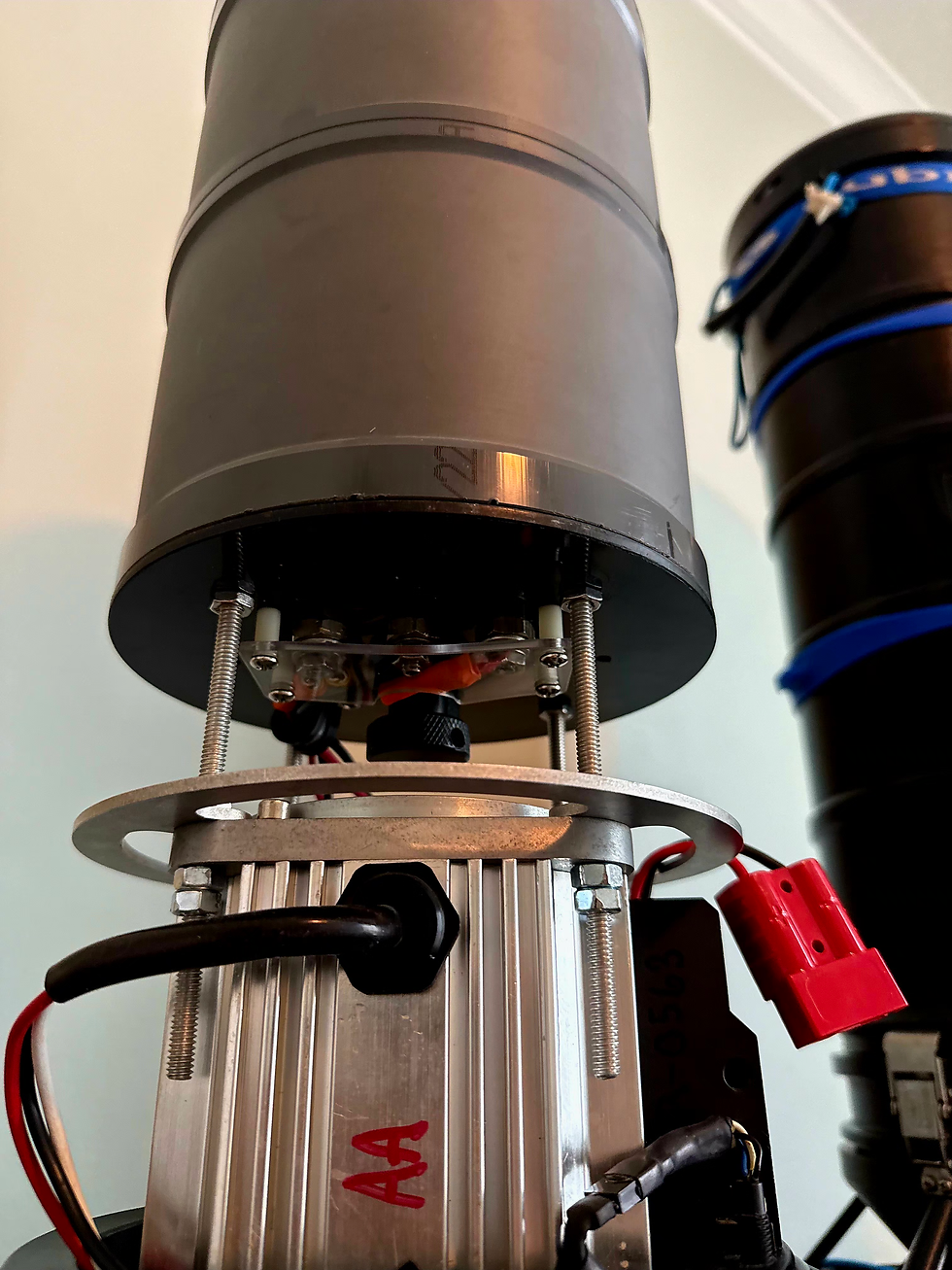
One of the more straightforward ways to understand how a DPV is performing is to burn test it. Not based on feel or what it used to do but actually running it under load and seeing the result.
Because expected runtime and actual runtime don’t always line up.
Even relatively newer packs can lose 20–30% of usable capacity over a few years depending on how they’ve been stored and cycled. And it’s not just total runtime.
As internal resistance increases, you tend to see more voltage sag under load, which usually shows up as the scooter losing thrust earlier in the dive, even if there’s still charge left.
Everything may feel normal at the beginning. It just doesn’t stay that way as long.
A Simple Baseline
Running a burn test periodically, even just once a year, gives you a baseline. It tells you what runtime you actually have, how the pack behaves under load, and whether performance is consistent across the discharge.
It doesn’t need to be complicated. It just needs to be real data.
Where It Usually Shows Up
The place you notice these things isn’t on the bench, it’s in the water.
If you’re planning around a certain runtime and the actual performance is significantly shorter, that changes how the dive plays out. And unless you’ve tested it, it’s easy to assume everything is still where it used to be.
That’s exactly why we run burn tests the way we do, so there’s a clear picture of what the system is actually doing before it’s relied on.
What We Tend to See
Most of the scooters that come across the bench aren’t completely failed. They’re still running, just not performing where they probably should be.
Shorter runtime than expected, noticeable voltage drop under load, early corrosion starting internally, seals and o-rings that are due for replacement.
Nothing dramatic. Just enough to matter.

“It Still Works” Only Tells You So Much
If it still runs, it’s easy to leave it alone.
But that only tells you part of the picture. It doesn’t say much about seal integrity, battery performance under load, or how consistent it’s going to be over the course of a dive.
It just means it turns on.
A Little Maintenance Goes a Long Way
Most of this isn’t complicated, but it does require paying attention.
Looking at seals and o-rings, making sure lubrication is correct and consistent, and replacing shaft seals before they become a problem instead of after.
It’s not a lot, but it adds up over time.
If It’s Been Sitting, It’s Worth a Look
If a DPV has been sitting between trips, there’s a good chance it’s not in exactly the same condition as the last time it was used.
Not because anything failed, but because things changed while it wasn’t being used. That’s usually when it makes sense to take a closer look before putting it back into regular use.
What We Do
A lot of what we do is centered around giving people a clearer picture of where their equipment actually stands.
That can be straightforward, like inspecting seals and o-rings, replacing worn shaft seals, and checking internal condition. Or more detailed, like full burn testing, voltage under load analysis, and battery performance reports with voltage curves and realistic runtime expectations.
For people traveling in to dive, we also store DPVs and maintain them between trips so they’re ready to go when you get back. That includes keeping batteries in a healthy state and verifying performance ahead of time so there are no surprises.
Final Thought
Most DPVs don’t give you a clear indication when something is starting to fall off. They just gradually stop being what they were, and because it’s gradual, it’s easy to overlook.
The difference is usually in whether you’ve taken the time to actually see where things stand before relying on it.
If You’re Not Sure Where Yours Stands
If your setup has been running for a while, or it’s been sitting between trips and you haven’t really looked at it closely, that’s pretty common. But that’s also usually where the unknowns are.
A quick inspection or a proper burn test can tell you a lot about what you actually have, especially before your next dive or trip.
If you want a clear picture of where your DPV is at, we can take a look at it, run a burn test, and give you real numbers to work with so there aren’t any surprises in the water.


Comments